Wednesday, March 16, 2011

Personal and Universal Symbols-your Mark(s)

an example of using symbols in artwork "Siren's Call" 30X40 acrylic on canvas


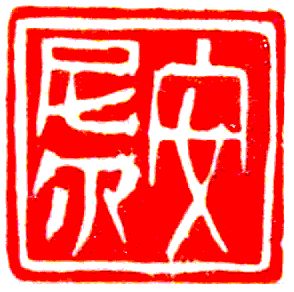
Invent your symbols-what represents you? Make a stamp of it through a lino cut. For example: a house, a bird, a tree, a new shape-think of it as a "chop" as in the Chinese Culture for calligraphers and artists, or personal mark. Be as specific as you can. The univeral symbols are:
square, circle, cross, triangle and spiral. How can you work these into a painting or start a painting using a combination of of your personal symbol or symbols and the universal ones?


example of chinese chop from the following blog: http://clarewilkinson.blogspot.com/2009/01/asian-screen-painting.html
Wednesday, March 9, 2011

Name the Painting-Painting by Intention

Discovery. work on paper, 23 x 35

Before you start, give your painting a working title. Remind yourself to refer back to your original inspiration--what do you want to communicate in your painting? For example you could use a literal title such as "The Green Door," which could describe a place: real or imaginary. An alternative would be a metaphor for feeling, such as "Adventurous and Free." Celebrate what your title means. Think of colors that relate to the title, shapes that evoke your intention. Staying focused on your main idea is like following a road map and helps keep you on track.

Wednesday, February 23, 2011

Painting Inspired by the Five Senses (Follow up)


Record impressions of a landscape for 10 minutes, non-stop. Consider the following questions as you draw/paint:


1. How does the air feel on your skin?
2. What color attracts your eyes?
3. What fragrances and odors do you smell?
4. What sounds do you hear?
5. What does your sense of taste detect?
6. Do lights and shadows attract your attention?

Afterwards, use the short impression to push yourself to recreate the experience in bigger or more detailed iterations.

Wednesday, February 16, 2011

Five Senses Painting Inspirations


Create five paintings, one according to each of the senses. Use a limited color palette of reds, yellows, and blues.


1.Taste- favorite foods, fruits or vegetables.


2. Touch- fabric or other material. Consider how it feels, hard soft, etc.


3. Hear- use music or remembered sounds to inspire your composition.


4. Smell- experience aromas, real or imagined, and consider what mood is evoked.


5. See- re-exmine photos of visited places, or consider lights and darks. Compare how you see outside vs. inside.
Compare the five paintings. Detirmine how focusing on the five senses individually helped form different outcomes.

Wednesday, February 9, 2011

More Winter Tips for Creativity!


Texture Tip:

Gesso on various surfaces affords experimentation. Apply gesso to quality paper surface such as watercolor or heavy drawing paper (may also be used on canvas). Drag a comb, palette knife or spackle knife through wet surface to make various marks and textures. Allow to dry. Using pencils, paints, pastels-create lines and shapes. Suggested subject matters for gesso include--flowers, trees, rocks, abstract, people and doodles. Design is still a
very important element. Notice the interplay of textures, shapes and lines.


Wednesday, February 2, 2011


Winter Painting Tips, Cont'd.

Pouring Paint

Pre-Mix 4-5 colors of acrylic or watercolor into small cups. Pour 2-3 colors onto a prepared paper * or canvas surface. Allow to mingle together in interesting ways by tilting the surface of paper or canvas. Allow to dry. See what shapes you can pull out to create a start for a compostion. Layer more shapes by repeating the pouring procedure until you get a desired product.

* prepare surface with gesso on canvas or medium (matt or gloss or a mixture) on paper..allow to dry


Musical Mania

Put on your favorite Sound

Warm up your body, stretch a few minutes. Then, pack up a few colored pencils (or media of choice)-- scribble and doodle for a while and see what occurs. Set a time limit of 10 minutes. Notice how your choices respond to the music. Are your colors bold if the music is bold? Tune into your responses. After the ten minutes are up, stop and assess what is happening on the sheet of paper. Find interesting shapes, change the music and the mood, and repeat. Be sure to stop throughout the process and be aware of the changes happening on the page.


Wednesday, January 5, 2011

More Winter Tips to Paint and Create!


I'm glad that some of you found my last post helpful! Here are some more to get your creative juices flowing this season:


1. Journal Refresher-Using a moleskine journal (e.g. 5" x 8" or smaller), unlined or similar, draw ideas with notes whenever and wherever you venture to. Carry a black fine line permanent marker and a few colored pencils in a ziplock bag in your jacket pocket or purse. Observe the things around you, such as people that are traveling, baren trees, the winter landscape, and objects in waiting rooms are all perfect subject matter to voice your creative spirit while you're on the move.


2. Get inspired from a "Master Artist"-Select someone you admire and connect with. For example, I chose Matisse for his line and color. Start with a piece of quality paper. Use ink, twigs, brushes, paint, and charcoal. Draw with calligraphic lines (thin, medium, and thick marks), add color pools and then respond with new layers. The key is not to copy another artist, but to get into his/her spirit through imitation. This can lead to a full investigation of the artist which is fine for gaining insight and motovation to produce your own work.